
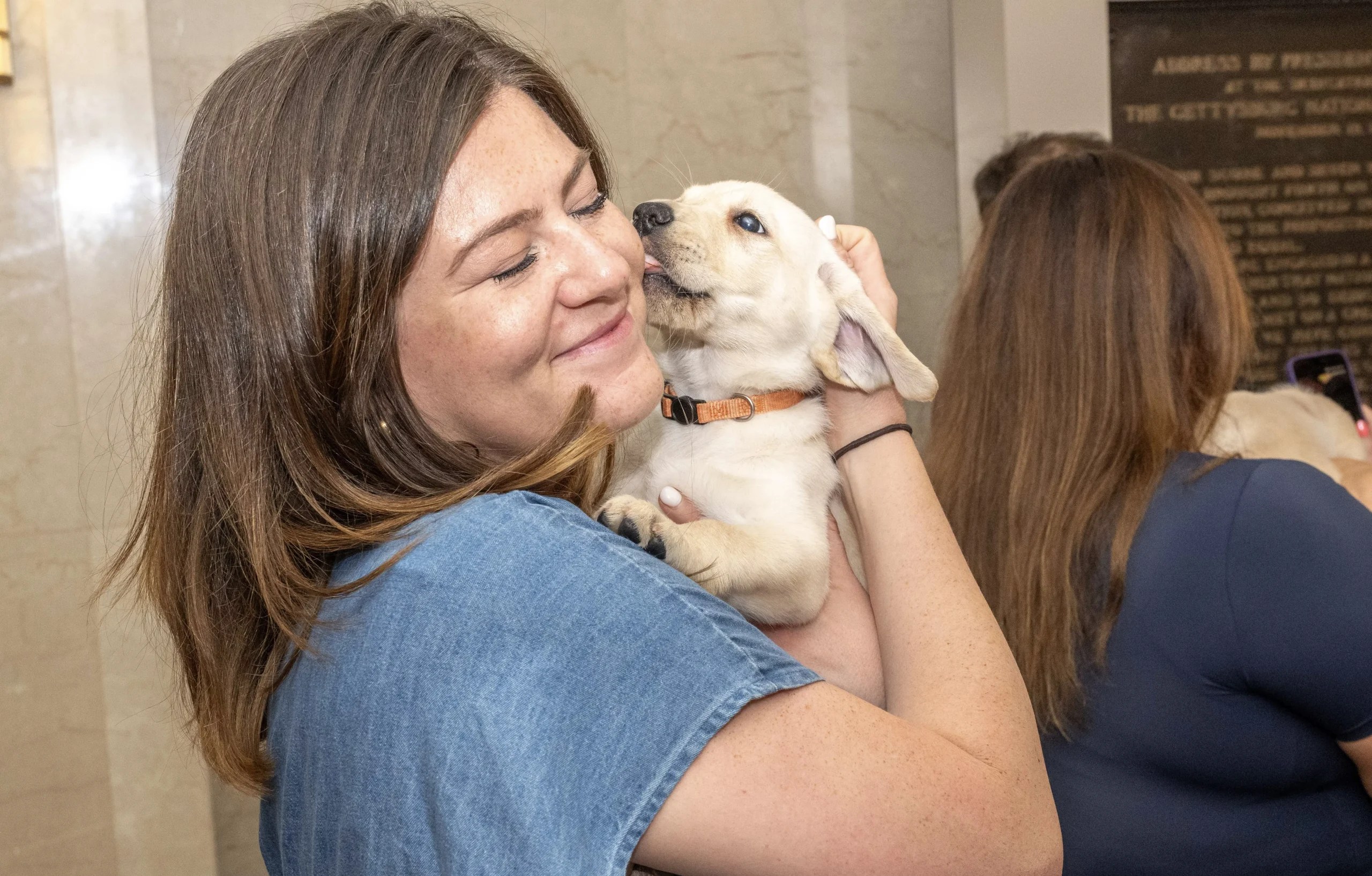
Recently, the halls of the Department of Veterans Affairs (VA) Central Office in Washington, D.C., welcomed some very special visitors: six-week-old puppies from Warrior Canine Connection (WCC).
VA employees gathered for smiles, cuddles and a chance to meet the pups. VA leaders, including Deputy Secretary Paul Lawrence and Chief Veterans Experience Officer Lynda Davis, also attended in support of the event and to highlight the meaningful role trained service dogs can play in Veterans’ lives.
But the visit was more than a cheerful break in the workday. For these young dogs, every new person, sound, space and positive interaction is part of preparing for a future serving Veterans.
An early step toward service
At six weeks old, the puppies are entering a critical period of socialization. Safely meeting new people and experiencing unfamiliar environments helps them build confidence, adaptability and the friendly temperament needed for future service-dog training.
The visit gave VA employees a chance to contribute to that journey. The puppies received valuable exposure and affection, while employees connected with the next generation of potential service dogs.
A partnership that supports Veterans
Warrior Canine Connection works with VA and state-level Veterans agencies to expand access to highly trained service dogs for Veterans, particularly those living with post-traumatic stress disorder (PTSD), traumatic brain injury and other service-related injuries.
For many Veterans, a service dog offers more than companionship. These dogs are trained to perform specific tasks that can help their Veteran navigate daily life, manage symptoms, build routines and feel more confident in public and at home. VA research has found that trained service dogs can provide greater support for PTSD-related challenges than emotional support animals because of their specialized assistance.
WCC is also a partner of the VetResources Community Network (VRCN), VA’s front door for outreach and community engagement. Through partnerships like VRCN, WCC helps strengthen a coordinated network of resources for the Veteran community.
WCC is one of only two nonprofit organizations working directly with VA to help provide trained service dogs to Veterans who need them. That relationship brings WCC’s therapeutic approach into VA healthcare and rehabilitation settings, making support more accessible to the people who have served our country.
Veterans enrolled in VA healthcare and interested in service dog benefits can start by talking with their VA provider about whether a service dog may support their treatment plan. Their provider can then guide them through evaluation, referral and ongoing support.
Building healing through purpose
WCC’s work also goes beyond placing service dogs. Through Mission-Based Trauma Recovery, or MBTR, Veterans can participate in a volunteer-driven, animal-assisted program that combines service-dog training with personal development.
As Veterans help train future service dogs, they can practice communication, strengthen confidence and develop emotional-regulation skills. The model reflects a powerful idea: healing can grow through purpose, connection and the chance to help someone else.
The Puppies Assisting Wounded Servicemembers (PAWS) for Veterans Therapy Act established VA pilot programs incorporating service-dog training into PTSD treatment. WCC serves as the nonprofit provider at two of the five pilot sites, including programs at VA facilities in North Carolina and California.
More than a puppy visit
The visit to VA Central Office was a joyful for employees—and for the six-week-old puppies a new experience, and a welcoming lap.
Through VA’s continued partnership with Warrior Canine Connection, more Veterans can participate in training, more service dogs can be placed and more people can find support on their path toward recovery.
To learn more about Warrior Canine Connection and its work supporting Veterans through service-dog training and Mission-Based Trauma Recovery, visit warriorcanineconnection.org. To learn more about joining VRCN, visit the VetResources Community Network page and explore opportunities to become a partner.


0 Comments