
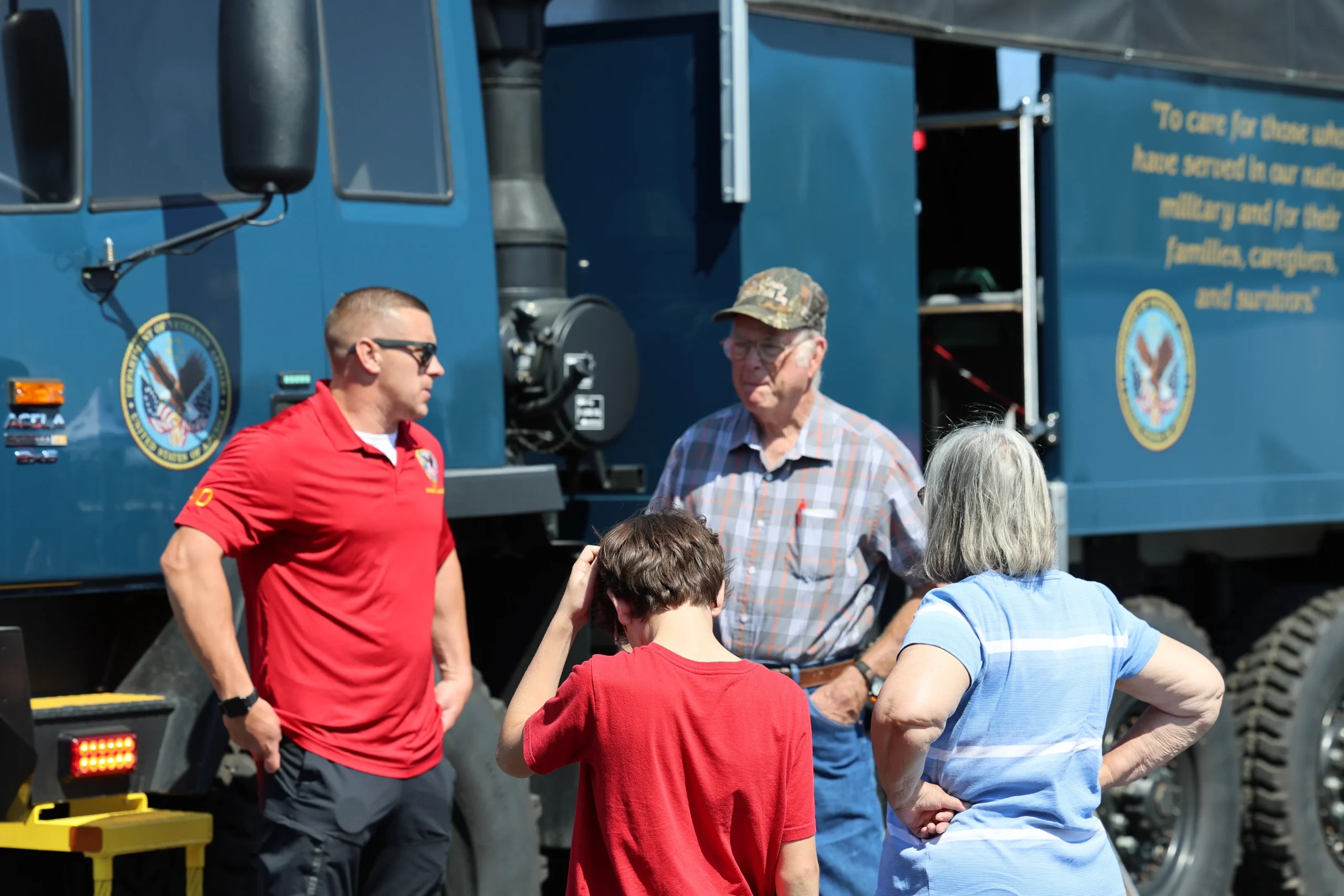
The Federal Emergency Management Agency marks this September’s National Preparedness Month with the theme “Americans Stand Ready.” With it, the Department of Veterans Affairs reinforces two key assurances: Veteran Ready and VA Ready.
Veteran Ready
The FEMA-led NPM observance asks Americans to turn preparedness into action by volunteering, organizing and sharing skills with neighbors. Veterans are a natural fit for the role, given their training in planning, logistics and crisis response.
“Veterans already know how to prepare, adapt and lead under pressure — that’s what their service instilled in them,” said Derrick Jaastad, executive director of the Veterans Health Administration’s Office of Emergency Management (OEM). “This is about channeling that experience into local communities, so Veterans aren’t just ready themselves — they’re helping everyone around them stand ready, too.”
VA’s Office of Operations, Security and Preparedness and the VHA OEM coordinated with FEMA’s Ready Campaign throughout September, aligning weekly themes with Veteran-specific outreach. Other themes focus on identifying local risks, building family emergency plans that include VA health and benefits information, and assembling emergency kits stocked with medications and key documents.
VA encourages Veterans to engage with VA’s volunteer services, Community Emergency Response Teams and local emergency management offices to mentor neighbors on basic preparedness.
“We ask Veterans to consider one simple action: share what you know,” Jaastad said. “Whether that’s helping a neighbor build a kit or joining a local response team, that’s how readiness spreads — one household, one community at a time.”
VA Ready
VA has a “Fourth Mission,” authorizing support, not just for enrolled Veterans, but entire communities when local medical systems buckle under a storm’s weight. OSP and VHA OEM work year-round to track threats, protect VA facilities and pre-position staff and supplies where they’re most needed.
In practice, that means VA can perform outreach, surge mobile medical units into storm-damaged communities, transfer patients from threatened hospitals before landfall, and keep Veterans connected to care through telehealth when roads are impassable and clinics are dark. VA coordinates directly with FEMA and the Department of Health and Human Services, state emergency managers and local agencies, so that when a storm makes landfall, the response is already moving.
“If we have the capacity, capability and authority to respond with our emergency management resources, we will,” Jaastad said. “This is our mission.”
But even the most capable emergency system has limits. It cannot help a Veteran who cannot be reached.
Answer the call
When major storms or incidents occur, VA may contact Veterans in affected areas by phone, text or email with real-time information about clinic closures, alternate care sites, pharmacy refills and evacuation guidance.
Veterans are urged to do two things: prepare and respond.
If you are a Veteran with high-risk medical conditions and a weather threat is predicted, keep your phone charged and save your VA medical center’s number in your contacts. If a call or text comes from VA during a weather threat, open it. Read it. The message may ask if you need assistance, tell you where to refill a critical prescription, how to reach your care team by telehealth, or where the nearest alternate clinic is located. Missing that message could mean missing care.
VA also asks Veterans to make sure their contact information — phone number, address and email — is current in the system before storm season intensifies. It takes minutes to update, and it ensures VA can reach you when it matters most.
National Preparedness Month runs throughout the month of September, but Jaastad says the push to engage Veterans in community readiness will continue year-round.
Learn more about VA emergency preparedness resources.

0 Comments