
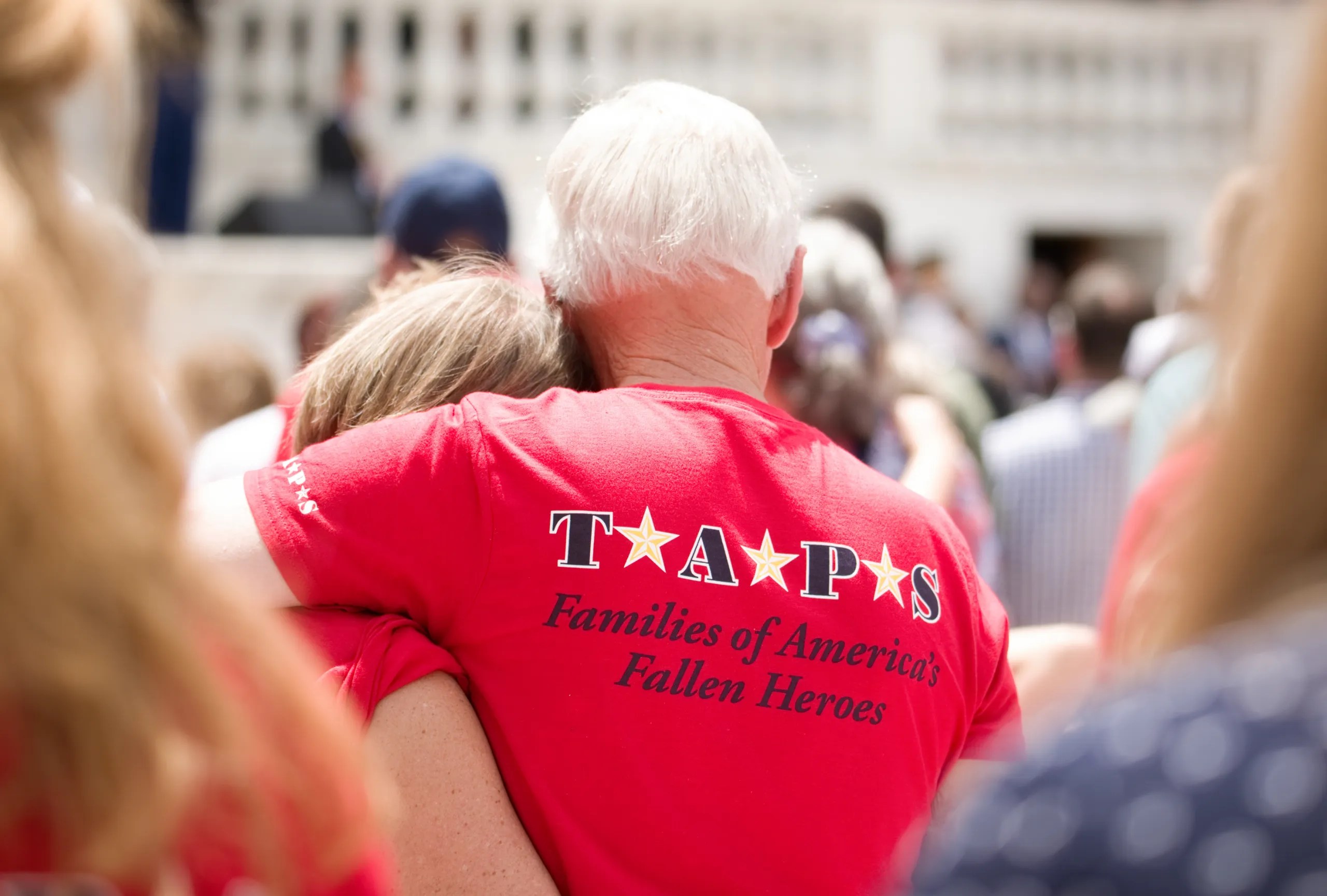
Suicide Prevention and Awareness Month reminds us to consider risk factors, recognize warning signs, begin honest conversations and connect people who are struggling with the help they need. It also reminds us to support people grieving after a death by suicide.
A military or Veteran suicide loss can affect families, friends, colleagues and battle buddies. People grieving this type of loss may experience isolation, guilt or stigma, and they may struggle to answer difficult questions. Timely interventions, comprehensive support services and resources can protect their well-being, reduce risk and strengthen their path toward healing.
This support is called postvention, and it’s a vital part of suicide prevention.
A free resource
Drawing on more than three decades of experience, Tragedy Assistance Program for Survivors, or TAPS, has developed evidence-informed resources and programs that support survivors in the immediate aftermath of a loss and throughout their grief journey.
Through its nationally recognized TAPS Suicide Postvention Model, TAPS provides a best-practice approach to care after a death by suicide. The model helps survivors find immediate stability, understand and process their grief, strengthen protective factors, and move toward healing, hope and renewed purpose.
TAPS describes postvention as a continuum of care: compassionate, proactive support after a death that helps survivors heal and may reduce the risk of further tragedy.
Postvention helps survivors find safety, stability, connection and hope after a loss. This care also supports suicide prevention by reducing isolation and helping survivors access trusted resources. Widely cited research found that one death by suicide can affect at least 135 people exposed to the death. Each person may experience the loss differently and need a different level of support.
TAPS responds at the time of loss and remains available in the years that follow.
Who can receive support?
TAPS welcomes anyone grieving a military service member or Veteran who died by suicide. You don’t need to be the person’s legal next of kin.
Spouses, partners, children, parents, siblings, extended family members, friends, colleagues and battle buddies may seek support. The death may have occurred during military service, after the person became a Veteran or after retirement from the military.
There is no cost to receive support from TAPS. Services remain available regardless of how much time has passed since the death of a service member or Veteran.
Available support
- Survivors grieving the death by suicide of a military service member or Veteran can call the TAPS National Military Survivor Helpline at 800-959-TAPS (8277) 24 hours a day, seven days a week.
- Trained survivor care professionals listen, identify each caller’s needs and explain available options. Support may include peer mentoring, online care groups, local resources and peer-group connections, grief counseling referrals, casework and education assistance.
- TAPS offers suicide-loss resources for adults, children and those who support them.
- A TAPS peer mentor can provide a relationship with someone who understands this kind of loss through shared experience. That connection can replace isolation with understanding and help survivors see that hope and healing remain possible.
- TAPS also helps families discuss suicide with honesty, compassion and age-appropriate language. Open conversations can reduce shame and make it easier to ask for support.
How to connect
Visit TAPS suicide-loss support to learn about available programs and support after a suicide loss.
If you have experienced the loss of a military service member or Veteran, visit Join TAPS. You can also call 800-959-TAPS (8277) at any time for postvention support or help at any point in your grief journey.
Whether your loss happened recently or years ago, you don’t have to carry it alone.
If you are a Veteran in crisis or are concerned about one, contact the Veterans Crisis Line. Dial 988 then Press 1, chat online at VeteransCrisisLine.net/Chat, or text 838255.
How you can help
During Suicide Prevention and Awareness Month and throughout the year, learn about the critical role of postvention care and how TAPS supports people in the military community affected by suicide loss. Share this free resource with a Veteran, survivor, military family member or battle buddy who may need it.
You can also volunteer. For many Veterans, serving others doesn’t end when military service does. Through the TAPS Military Mentor Program, volunteers can mentor a grieving military child and offer steady connection, encouragement and belonging.
Whether you want to give back, explore meaningful volunteer opportunities or support a military family, becoming a TAPS Military Mentor is one way to make a difference. Visit TAPS to learn more about mentoring a grieving military child.
Connect with TAPS
- Instagram: @TAPSorg
- X: @TAPSorg
- Facebook: Tragedy Assistance Program for Survivors (TAPS)
- LinkedIn: Tragedy Assistance Program for Survivors (TAPS)
- TikTok: @tapsorg
- YouTube: @tapsorg

0 Comments